
 Chemicals
 Lab Accessories & Equipment
 Filteration
Laboratory Centrifuges: A Complete Guide to Types, Applications, and Buying Criteria for Industrial and Quality Control Labs
A technical guide to choosing and buying laboratory centrifuges for industrial and quality control labs — types, applications, and key technical criteria | Ario Exir Mandegar
Introduction
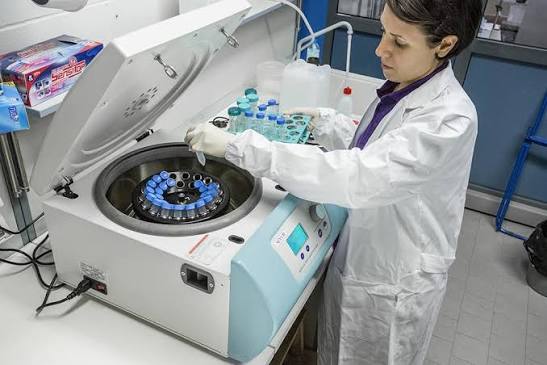
In industrial laboratories and quality control units, accuracy and speed in sample separation are core pillars of reliable analytical workflows. The laboratory centrifuge is one of the most widely used pieces of equipment in this field, playing a key role in separating sample components based on density and molecular weight. Drawing on its experience in supplying laboratory materials and equipment, Ario Exir Mandegar presents this technical guide covering centrifuge types, applications, and the criteria that matter most when selecting the right unit for an industrial lab.
What Is a Laboratory Centrifuge and How Does It Work?
A centrifuge separates the components of a mixture or suspension by density, using centrifugal force. As a sample spins at high speed inside a rotor, denser particles move toward the bottom of the tube while lighter particles remain near the top. Industrial labs rely on this process for sediment separation, solution clarification, sample preparation ahead of further analysis, and many other applications.
Centrifuge speed is typically expressed in revolutions per minute (RPM) or relative centrifugal force (RCF), and choosing the correct value for a given sample type and test objective is critical to reliable results.
Types of Laboratory Centrifuges
1. Benchtop Centrifuges
Compact and space-efficient, benchtop centrifuges are common in quality control and industrial labs with moderate workloads. Typical speeds range from 4,000 to 15,000 RPM.
2. High-Speed Centrifuges
For applications requiring the separation of finer particles or samples with closely similar densities, high-speed centrifuges (up to roughly 30,000 RPM) are the preferred choice — widely used in the pharmaceutical and petrochemical industries.
3. Ultracentrifuges
Operating at speeds exceeding 100,000 RPM, ultracentrifuges are used to separate extremely small particles such as viruses, proteins, and nanoparticles. They are most common in research and biotechnology laboratories.
4. Refrigerated Centrifuges
Equipped with a cooling system, refrigerated centrifuges are designed for temperature-sensitive samples — such as biological materials and certain unstable chemical compounds — to prevent thermal degradation during processing.
5. Microcentrifuges
For small sample volumes (typically under 2 mL), microcentrifuges are the practical choice. Their compact footprint also makes them well suited to labs with limited bench space.
Applications in Industrial and Quality Control Labs
Industrial and QC laboratories rely on centrifuges across a wide range of processes, including:
- Separating sediments and impurities from chemical solutions prior to instrumental analysis
- Sample preparation for chromatography and spectroscopy testing
- Quality control of petroleum and petrochemical products, including determination of basic sediment and water (BS&W)
- Microbiological testing, for separating cells and microorganisms
- Food industry applications, such as separating fat from milk and dairy products
- Pharmaceutical applications, for purifying active pharmaceutical ingredients
Key Criteria for Selecting and Buying a Laboratory Centrifuge
Choosing the right centrifuge for a given lab should be based on the following technical and operational criteria:
Capacity and Sample Volume
Rotor capacity — the number of tubes that can be processed per cycle — should match the lab's daily workload. High-volume industrial labs generally require units with greater capacity.
Maximum Speed and Achievable RCF
Different laboratory protocols call for different speeds and centrifugal forces. Confirming that a candidate unit covers the speed range required by your protocols is essential before purchase.
Rotor Type
Fixed-angle rotors and swinging-bucket rotors each serve different purposes. Fixed-angle rotors are better suited to rapid pelleting, while swinging-bucket rotors are preferred for gradient separations.
Temperature Control
For labs working with heat-sensitive samples, a built-in cooling system with precise temperature control is essential.
Safety and International Standards
Reputable centrifuges should include safety features such as lid locks during operation and rotor imbalance detection, and should carry recognized international certifications such as CE and ISO.
Noise and Vibration Levels
In work environments with continuous staff presence, choosing a unit with low noise and vibration meaningfully improves working conditions.
After-Sales Service and Technical Support
Given the sensitivity of this equipment, the availability of calibration, repair, and spare-parts support from the supplier is often a deciding factor in the final purchase decision.
Maintenance and Calibration
To preserve accuracy and extend the equipment's lifespan, the following practices are recommended:
- Periodically checking rotor balance and replacing tubes and adapters as needed
- Regular cleaning of the interior chamber to prevent corrosion from sample leakage
- Periodic calibration of speed and temperature by qualified technical staff
- Inspecting the door safety lock before each use
Why Choose Ario Exir Mandegar for Laboratory Centrifuge Supply?
Ario Exir Mandegar focuses on supplying high-quality laboratory materials and equipment, offering a range of benchtop, industrial, and specialized centrifuges tailored to the needs of industrial and quality control labs. Services include technical consultation for selecting the right unit, technical documentation and calibration support, and after-sales support for customers.
Conclusion
Selecting the right laboratory centrifuge has a direct impact on the accuracy of test results and the efficiency of quality control processes. Factors such as rotor type, speed, capacity, cooling system, and safety standards all play a role in matching a centrifuge to a lab's operational needs. For technical consultation on selecting and purchasing a laboratory centrifuge, contact the specialists at Ario Exir Mandegar.
This article is intended for professional informational purposes. For detailed technical specifications and pricing inquiries, please contact the sales team at Ario Exir Mandegar.
Were you satisfied with the content?